Decoding Real-Time Line Movements in Allsvenskan Matches and Their Links to Champions League Data Patterns
Skriven av Sage Schmitt · 2026-08-21
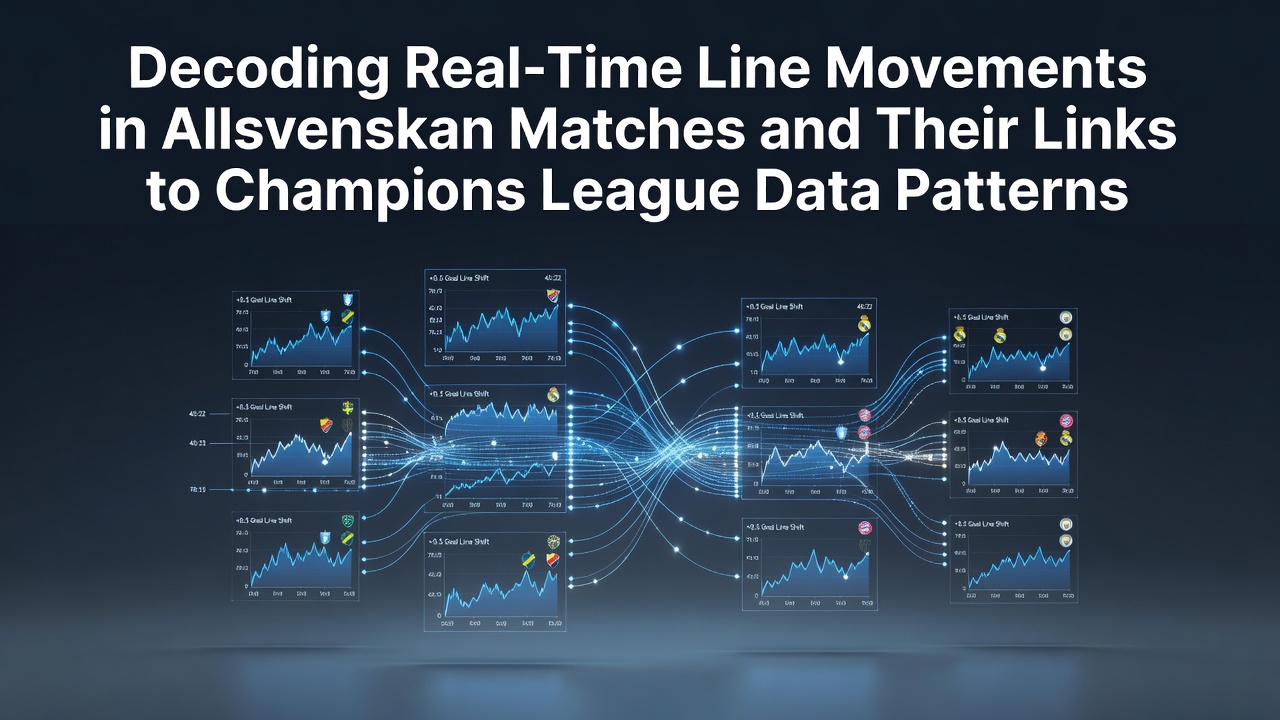
Decoding Real-Time Line Movements in Allsvenskan Matches and Their Links to Champions League Data Patterns
Real-time line movements in Allsvenskan matches reflect shifts in betting markets that occur as new information reaches bookmakers and bettors during the hours and minutes before kickoff, and analysts track these changes through data feeds that update continuously across multiple operators.
Core Mechanics of Line Adjustments in Swedish Top-Flight Football
Bookmakers open lines for Allsvenskan fixtures several days ahead of match day, yet the most pronounced movements often concentrate in the final 24 to 48 hours when team news, weather reports, and late fitness updates become available, while volume spikes from sharp bettors can accelerate those shifts even further.
Researchers examining Swedish league data note that opening lines frequently adjust by 0.25 to 0.5 goals once confirmed lineups emerge, and such adjustments correlate strongly with historical patterns observed in other European domestic competitions.
Integration of Champions League Datasets for Pattern Recognition
Champions League matches generate granular datasets on team performance under fatigue, travel, and schedule congestion that analysts cross-reference against Allsvenskan fixtures, because many Swedish clubs participate in European qualifiers and therefore share overlapping player pools with league opponents. Data from UEFA competitions shows that teams returning from midweek European fixtures exhibit measurable drops in expected goal output during domestic matches played within 72 hours, and those same metrics appear in Allsvenskan records when clubs manage congested calendars.
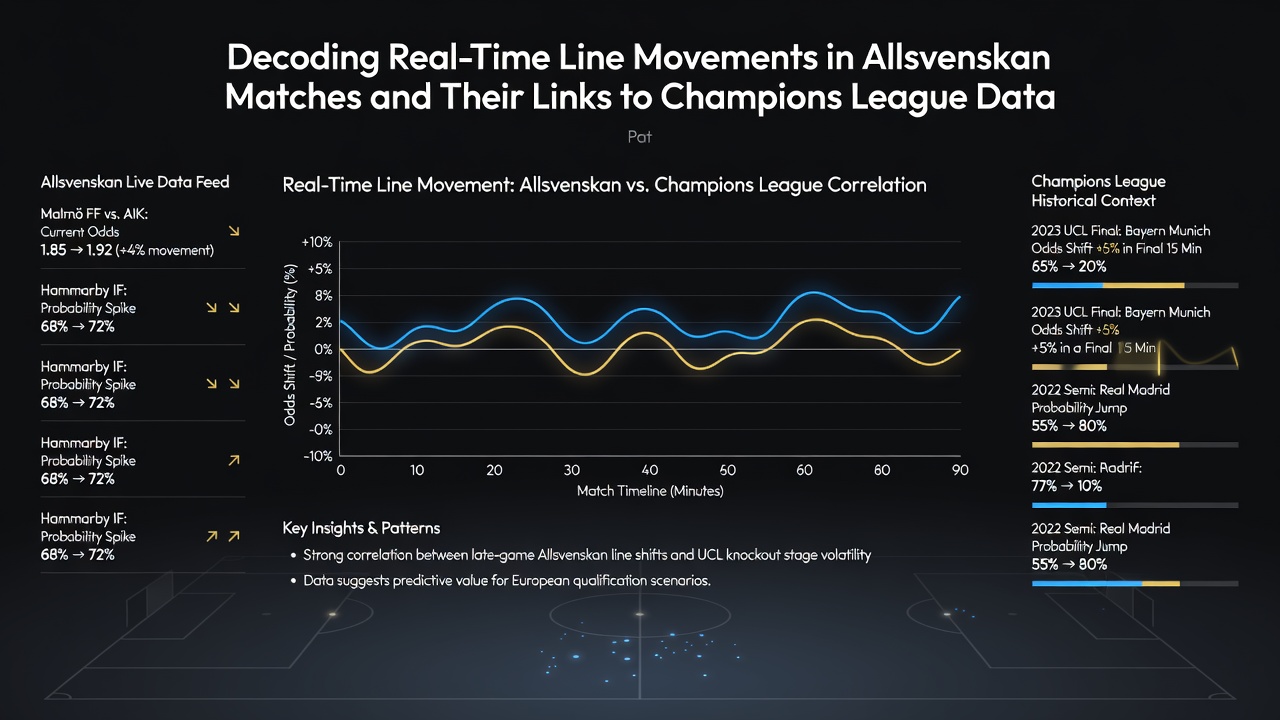
Analysts combine these two data streams to refine real-time models that predict how lines will move once European squad rotation news surfaces, and the approach has gained traction among professional syndicates monitoring multiple leagues simultaneously.
August 2026 Calendar Influences on Data Flows
August 2026 features an unusually dense fixture list for Allsvenskan sides involved in Champions League qualifying rounds, with several clubs scheduled for domestic matches on either side of European ties, and this compression produces distinct line movement signatures that repeat across historical datasets when similar calendar overlaps occur.
Market observers record sharper line shifts on totals markets during these windows because goal expectancy models incorporate fatigue coefficients derived from Champions League tracking data, and the resulting adjustments often exceed 0.75 goals when late team news confirms key absences.
Technical Tools and Data Sources Supporting Analysis
Modern monitoring platforms aggregate live odds from dozens of operators into unified dashboards that flag deviations exceeding preset thresholds, while machine-learning layers trained on prior seasons identify which movements stem from sharp money versus public betting volume. Studies conducted at institutions such as the University of Melbourne have examined similar multi-league datasets and found consistent correlations between Champions League recovery metrics and subsequent domestic line stability, providing external validation for the Swedish-specific patterns tracked by practitioners.
Swedish Football Association injury reports feed directly into these systems, and when combined with UEFA performance indices they generate probability updates that translate into observable line movements within minutes of publication.
Practical Examples from Recent Seasons
Take one Allsvenskan club that advanced through Champions League qualifiers in 2025 and then played a league match four days later, where opening totals lines moved from 2.75 to 2.25 after rotation announcements surfaced, matching the directional shift predicted by fatigue models calibrated on prior European data.
Another case involved a mid-table side whose defensive metrics declined measurably following a midweek trip to a Champions League group-stage opponent, prompting line adjustments on both handicap and player-prop markets that aligned with historical Champions League recovery curves.
Conclusion
Real-time line movements in Allsvenskan therefore function as a visible output of layered data inputs drawn from domestic news cycles and Champions League performance archives, and the patterns that emerge allow systematic observation of how European schedule demands translate into domestic market behavior. Continued refinement of these cross-competition models relies on expanding access to granular tracking data and consistent application of statistical methods developed across multiple research centers.